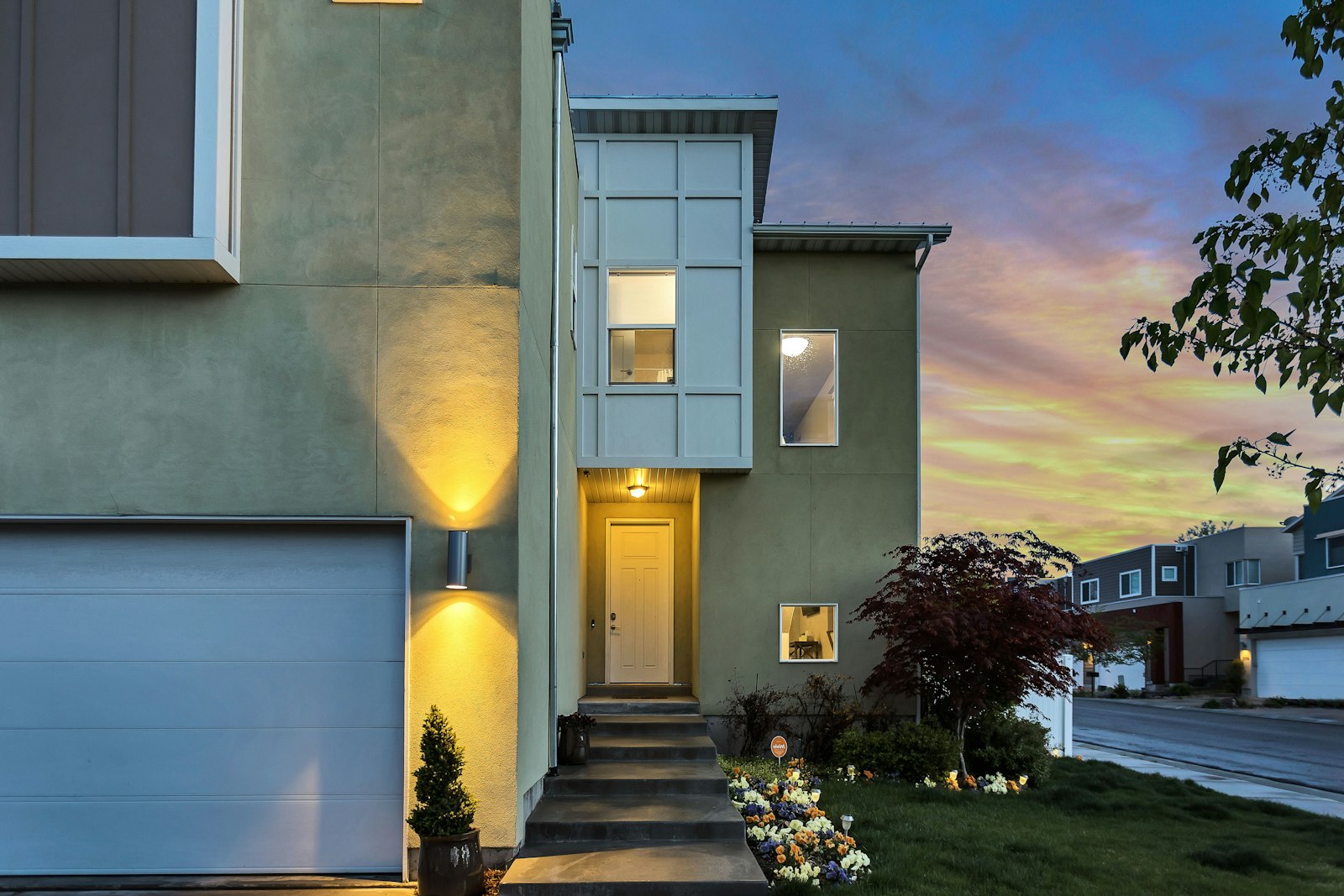
Introduction to Sustainable Home Design
Sustainable home design is the practice of planning homes around lower energy use, reduced material waste, healthier indoor conditions, and longer service life. The goal is not to chase a single feature. It is to make better decisions across the full house: structure, systems, finishes, and daily use.
That matters because homes are increasingly judged on running costs, resilience, and comfort, not just appearance. As the U.S. Department of Energy notes in its embodied carbon reference guide, material choice is now part of the efficiency conversation, not a side note.
For a practical overview of related home-performance choices, see Energy Efficiency and Sustainability and the blog archive for more guidance. You can also return to the homepage if you want the broader site context first.

Key Trends Shaping the Future
The direction of sustainable design is fairly clear even if the implementation varies by budget and climate. Three trends stand out.
| Trend | What it does | Why it matters |
|---|---|---|
| Smart home integration | Connects lighting, climate, and monitoring tools | Reduces waste by making control more responsive |
| Renewable energy | Uses solar and other on-site generation where practical | Improves energy independence and can lower operating emissions |
| Minimalism and functionality | Prioritizes durable layouts and fewer unnecessary finishes | Usually means less material use and easier maintenance |
Smart controls deserve particular attention. The ENERGY STAR smart lighting guide shows why sensors, schedules, and app-based control are useful when they reduce the number of hours lights run for no reason. The trick is to use automation as a support tool, not a substitute for good design.
Renewables and passive design also belong together. A house that wastes less tends to need a smaller system to supply it. That is the cleaner arithmetic, and it usually survives contact with reality better than marketing does.
Innovative Materials and Technologies
Materials now carry more design responsibility than many older construction checklists allowed. A sensible shortlist includes recycled-content products, responsibly sourced timber, high-performance insulation, and assemblies that can be repaired rather than discarded.
- Recycled and upcycled materials: useful where structural performance and finish quality are both acceptable.
- Smart building technologies: sensors, occupancy schedules, and demand-based controls that reduce unnecessary use.
- Energy-efficient appliances: lower everyday loads when selected for actual household patterns.
The U.S. EPA’s work on low-embodied-carbon construction materials supports a growing practical point: the supply chain matters as much as the drawing board. For exterior and interior fit-out, that means asking what the material is made of, how long it lasts, and whether it can be maintained without replacement every few years.
For homes that lean into lighting upgrades, the Department of Energy’s guidance on energy-efficient light fixtures is a reasonable benchmark. Efficient fixtures, good daylight use, and occupancy sensors usually beat dramatic gestures. Homes are rude about that kind of thing.
Pros and cons of common sustainable approaches
| Approach | Pros | Watch for |
|---|---|---|
| Timber and engineered wood | Renewable, warm appearance, often lower embodied carbon than heavier alternatives | Moisture detailing and sourcing quality |
| Recycled-content finishes | Can reduce virgin material demand | Availability, consistency, and maintenance |
| High-performance insulation | Strong effect on comfort and energy use | Correct installation matters as much as product choice |
| Smart controls | Can reduce waste and improve convenience | Over-automation can create frustration if settings are unclear |
Case Studies of Sustainable Homes
Real projects are useful because they force the theory to face costs, site conditions, and maintenance. Three examples show the range of approaches:
- Passive-oriented new builds: compact forms, careful glazing, and strong insulation reduce heating and cooling demand before technology is even added.
- Retrofits using mixed materials: older homes can gain better comfort through upgraded insulation, efficient lighting, and modern controls while preserving the original structure.
- Homes pairing renewables with demand management: solar works best when the house first lowers baseline demand and then shifts some use into better operating windows.
In each case, the environmental gain comes from a stack of decisions, not a single hero product. That is why sustainable homes worth copying are usually boring in the best possible way: measured massing, sensible materials, and controls that do not demand a manual to survive Tuesday.
For broader context on energy strategy at home, the overview at Energy Efficiency and Sustainability connects well with these examples.
Conclusion and Future Outlook
The future of sustainable home design is likely to be less about novelty and more about discipline. Better materials, better controls, and better planning should produce homes that are easier to maintain, cheaper to run, and less wasteful to build.
The most practical decision path is simple: start with the envelope, reduce demand, then add technology where it genuinely improves performance or daily life. If you are choosing between options, ask which one lowers waste, supports comfort, and will still make sense in ten years.
For readers continuing the comparison process, the blog is the best next stop, and the homepage remains the shortest path back to the site’s main sections.